
Smut and YA
When to battle against the fluidity of language

As a great philosopher of my generation asked, you can be under whelmed, and you can be overwhelmed, but can you ever just be whelmed?
And, not really. Whelmed in general means to be submerged, to be overtaken by a wave, which is in fact how we now use the term overwhelmed. The exact transformation of the word from whelmed to overwhelmed is unclear, but it brings forward a key point. Language is fluid. Language is in a constant state of development, so, what does that mean in regard to the current discourse about smut in young adult literature?

[Some background to these thoughts. There was some marketing earlier this year for a YA book that featured the word ‘smut’. While I believe the author and publisher have since amended the marketing, there was some discussion in the comments about how smut could refer to age appropriate sexual content, and that’s the thought I really want to dissect.]
You’re going to need to forgive me for talking about semantics and splitting hairs, but let’s be clear on some definitions, because yes, language is fluid, but it is also meaningful by consensus. What the majority agree on is how terminology is used and I think it is naïve to pretend that “smut ” does not have erotic connotations within the majority.
Context matters, a finger on its own is just a finger, but change the fingers around it and now I’m flipping you off.
Not all sex is smut. As a reader, if you had someone describe a scene in an autobiography where someone mechanically goes through their first disappointing sexual encounter, as smut, you would say they are incorrect. If you had a brutal rape scene designed to horrify the audience advertised as smut, you would feel mislead. If you had a romcom where the couple goes to have sex and the author closes the door and you are witness to none of it, and that was pitched as a smutty novel, you would feel cheated.
From these common reactions, we can see smut is sexual content designed to arouse; it is erotic. Definitionally, smut or smutty has been a way to describe sexual content in derogatory terms, it originally meant “dirty”, to have something smudged by filth. In general, authors have been trained to try and avoid using the term for fear that their books might be hidden by algorithms created by companies in fear of a moral back lash. We can still see that in TikTok with the creation of the term ‘spice’. Colloquially, both ‘smut’ and ‘spice’ are used in excited terms as a way for people to describe sexually explicit material that excites them.
Smut is not just sex, it is, to varying levels, pornographic, but the word gives us a way to talk about it without the moral and ethical implications that the porn industry raises. I, in general, avoid describing books as pornographic, not because I think it’s inaccurate when they are using sexual content to excite, but because of those exact implications. The context and baggage of that word changes its literal meaning which is “the depiction of sexual material intended to cause sexual excitement” (Merriam Webster), to something sexual without any additional value. If something is pornographic, we view it as worthless outside it’s sexual content.
Someone should tell the Louvre to cover up all those titty pics they have hanging up, because their intent was often indeed pornographic, although we would never think to call them porn because we recognise the artistic skill in crafting them.

(This dick would be far less impressive if shot from a bad angle on a grainy camera and then sent to you on tinder)
[Considering the political climate, I do also want to stress that smut is not bad. It is not evil or morally wrong, and I’m aware that there is a push to ban ‘illicit’ material in books, and arguments about the safety of the children are being used. I move forward in this argument with caution, because I do think there are issues to discuss, but I certainly do not want to give fodder to those who support ignorance.]
So, what is YA then?
We aren’t talking about Young Adult in any context, we are talking specifically within the publishing sphere. Again, context matters (don’t make me flip you off again). And within the publishing sphere, young adult is not a genre but an age category, a way to categorise books by their target market. Young adult novels are designed for people aged 12-18, you will be hard pressed to find a resource for writers, readers or parents within the publishing world that describes it differently.
That may annoy you. It could make no sense to you. But it is currently the understanding of the publishing industry, of booksellers, of libraries, and thus of the majority of consumers.
Now young adult in other contexts absolutely can mean other things: the united status census defines young adult as 18 to 25. And those asking for smut in YA often seem to want that definition of YA to stand. (There was a push a while ago to create the category of New Adult, which would fit that college age demographic, however it was not a movement that was strong enough to create new shelving spaces. New Adult remains solely a marketing term as opposed to a recognized singular demographic, and it’s also not a category you will often see out of contemporary romance.)
So the question becomes, should we have erotic material in media marketed towards children? And, when you phrase it like that, no, there aren’t many people who would make that argument. There are people who might be saying ‘so we shouldn’t have sexual content at all in YA?’ and no. That’s not what I said. Erotic and sexual are not synonymous.
Sex is a part of the teen experience, even for teens who chose not to engage in it themselves. Novels are an important medium to help people navigate things, and with something as socially prevalent and with so many multitudes as sex, it is something everyone could use help navigating. But it shouldn’t be erotic, it is not designed to titillate and excite. It is, to risk sounding like an after school special, educational. It is rooted in realism and trying to make teens feel prepared for the choices they’ll need to make. They might even find those scene’s erotic, but erotism was was not the point.
[Again, looking to those who want to ban books and use the idea of illicit or inappropriate material in teen books to do so. It does not matter if a scene is designed to arouse, or to educate, they view any sexual (or simply queer) material as inappropriate. No one would call John Green’s Looking for Alaska as smut, yet it is one of the most routinely challenged YA books. When we discuss how to market teen books responsibly, they will take either our support or rejection as evidence. They cannot be catered to and are not part of this discussion.]

“I was reading hard core porn when I was a teen”
But was it sold to you? Or did you choose to seek it out? What we market to teens vs what teens choose to consume are two separate things. And it is an important difference, because in a capitalistic society, marketing helps reflect and set social expectations. As a bi woman I have a massive amount of cringe over the rainbow capitalism we see during pride, but I also feel it’s still necessary because it signifies acceptance to the wider world. (Obviously others are free to disagree) If a teen reads a YA book where they enjoy the sexual tension between characters, they can choose to search out fanfiction or even create it themselves. If a teen feels ready for more explicit material, then the choice rests with them, they are in control.
I can only speak for myself, but I would have far less issue with a teen getting a copy of an erotic magazine then I would with someone actively trying to sell one to a teen.
I’ve often argued with my mum about the evolution in language, sometimes teasing her reluctance to accept a change, however she said something to me that sticks. It is that we should fight against any evolution in language that limits our ability to understand each other. The loss of variety in our language does limit our understanding.
If smut can mean any type of sexual content, be it erotic, violent, clinical, off page or educational, then we are going to be more prone to misunderstand each other instead of less. So, I say, smut is designed to make you horny. That’s just how people use the word, and to try and force a change would end up negatively affecting all. Especially those who happily request a healthy dose of spice with their stories.
But on the definition of young adult? As our poor friend ‘literally’ that now “literally does not mean literally” will tell you, the evolution of language is often out of our individual control and will happen by consensus. So, you might be there saying, well why can’t we change young adult to mean adults who are young? Why can’t YA literature mean 18-25? I don’t object to that in principle. And as we routinely hear that adults are buying YA far more than teens, and you will see the “does it have spice” question lobbed at YA books, it does suggest that such a change may already be in effect.
However. I do want to say that another change MUST occur first or concurrently. And that is the creation of the ‘teen’ category. If adults are going to pinch the term ‘young adult’ from kids, then we cannot just flood the young adult sections of bookstores or libraries with adult material. And far more importantly, we cannot push material for teens, written with them as the core audience in mind, off shelves.
I’m going to do it. I’m going to quote Helen Love Joy unironically!
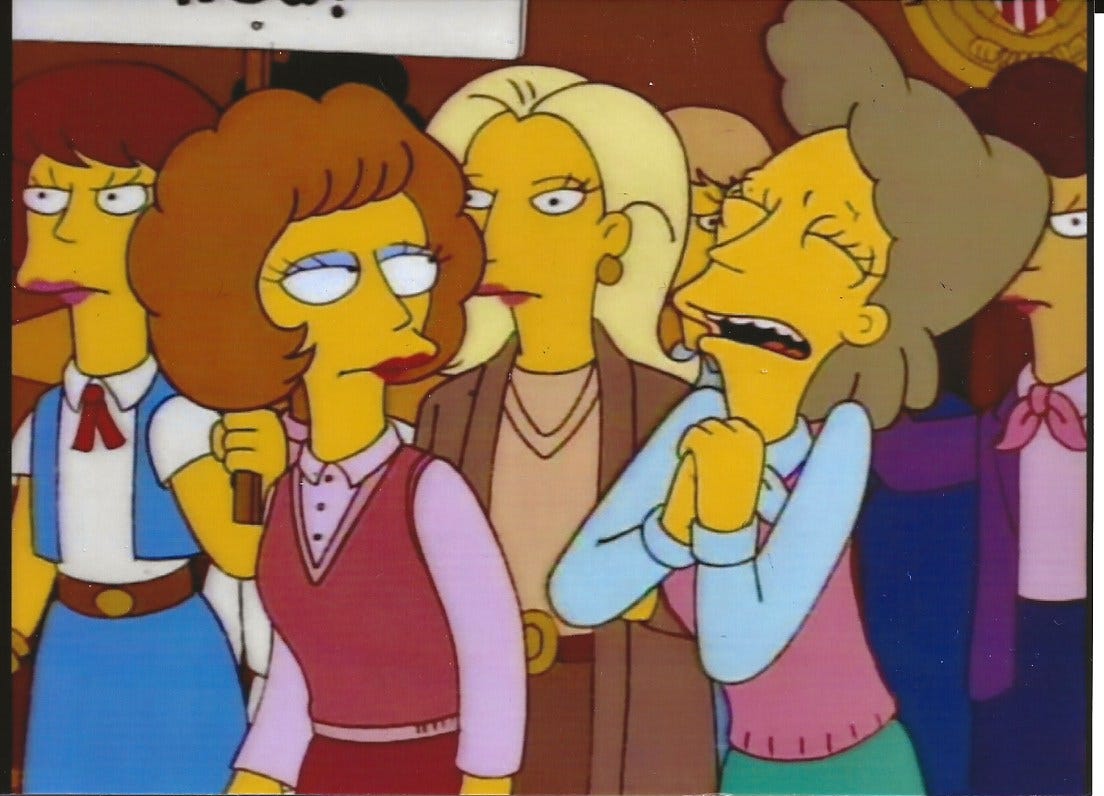
Won’t someone Please think of the children!
If you are calling a book aimed at 18–25-year-olds a young adult book, then please ALSO refer to books aimed at 12-18 as teen books. Be specific about the age of characters and the intended audience.
Do not forget the next generation of readers.